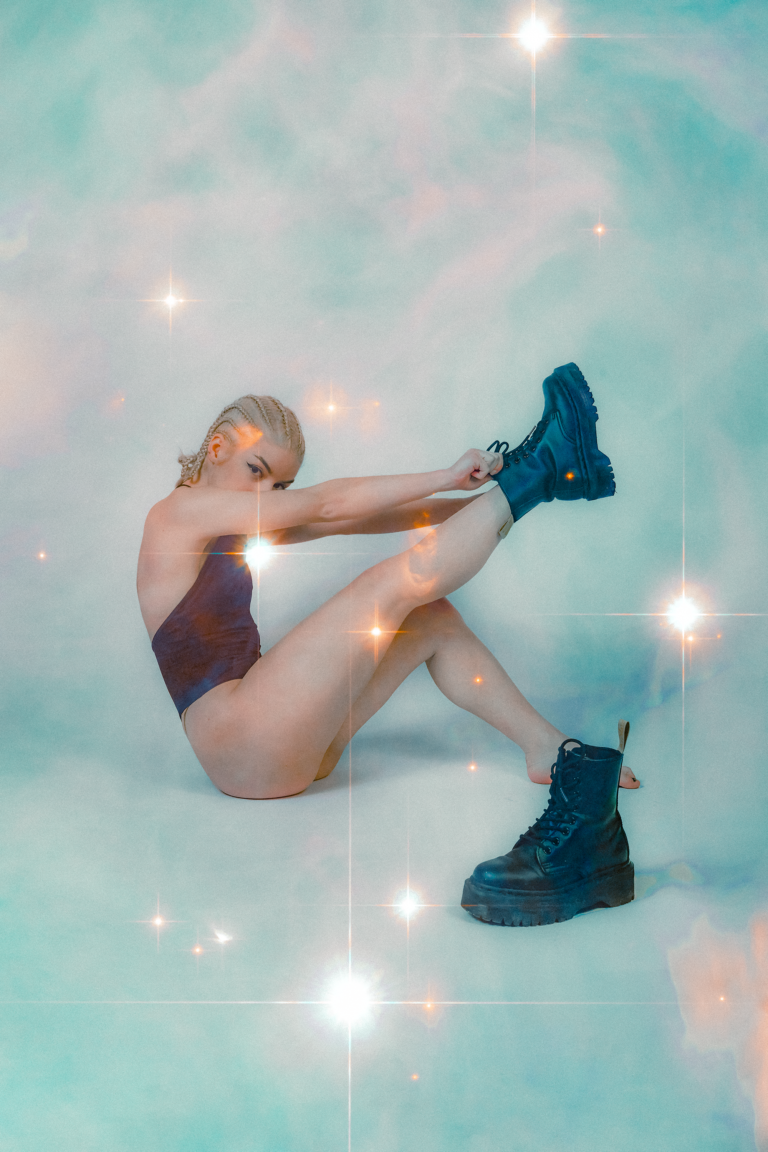
I was around thirteen when I discovered fashion magazines. Growing up in South America, European publications would arrive at our newsstands several months after their original release, often at considerably reduced prices. What might have been outdated material to someone else was an extraordinary opportunity for me. I would ask my mother to buy as many as possible, accumulating a collection of images, stories, advertisements and editorials that opened a window into a world I had never experienced firsthand.
This was before the internet became part of everyday life. There was no Instagram, no Pinterest, no endless stream of visual references arriving through a screen. For someone fascinated by aesthetics, magazines were everything. They were my introduction to fashion photography, art direction, typography, advertising and the elaborate visual languages through which brands constructed their identities.
So I cut them apart. The pages became collages covering my schoolbooks and folders, elaborate compositions assembled from photographs, lettering and fragments of advertisements. I wasn’t particularly interested in preserving the magazines as objects. I wanted to take their visual worlds apart and create something new with them.
Eventually, other students began noticing my work and asking me to decorate their books as well. Some even offered to pay.
I like to say this was my first professional design job. Technically, it was.
Looking back, what interests me most isn’t simply that I was already experimenting with graphic design. It’s that I was beginning to understand something about the power of images. A photograph, a typeface, a particular combination of colours or textures could communicate an entire atmosphere without requiring much explanation.
I didn’t have the vocabulary for it then, but I was learning to recognise visual identity, creative direction and the construction of desire.
And, perhaps more importantly, I was developing a taste of my own.
Discovering the Hands Behind Luxury
By the time I began studying advertising and graphic design in São Paulo, my interests were already relatively clear. Fashion, lifestyle, photography and visual communication were the areas that fascinated me most.
One of the defining projects of my education came at the end of my advertising degree, when I developed a complete communication plan for the Brazilian fine jewellery house H.Stern.
The project allowed me to explore luxury from a perspective that went beyond its finished appearance.
What interested me was the process of creation: the delicacy of jewellery-making, the technical knowledge accumulated through generations of craftsmanship, and the relationship between the skilled hands of artisans and the imagination of designers.
I wanted to communicate the human intelligence behind the object.
At the same time, H.Stern represented something else that fascinated me: the possibility of bringing traditional craftsmanship into conversation with contemporary creative thinking. The house’s collaborations with prominent designers and other creative figures offered an interesting example of how established expertise could coexist with experimentation, innovation and an unmistakable design identity.
My communication concept developed around this relationship between tradition and originality, between the knowledge preserved through making and the creative vision that allows it to evolve.
The project received the highest possible grade, 10 out of 10, and became an important milestone in my education.
But its significance to me went beyond the academic result.
It was one of the first times I consciously approached luxury as something more complex than beautiful products and desirable images. I began to see it as a combination of cultural knowledge, technical excellence, imagination and the ability to communicate value through an entire visual universe.
The project was an academic exercise, not a commission from H.Stern. Nevertheless, it helped establish a direction that would continue to influence my professional interests for years to come.
Inside the World of Fashion
After graduating, I had the opportunity to join Giovanni Bianco’s creative studio in São Paulo.
For a young designer fascinated by fashion and luxury, it was an extraordinary environment in which to begin a career.
The studio worked across fashion, jewellery, hospitality and entertainment, bringing together different disciplines under a highly developed approach to visual communication. During my time there, I had the opportunity to contribute to projects involving major fashion brands, restaurants, jewellery and prominent figures from the entertainment industry.
What made the experience so valuable was the exposure to the creative process behind those projects.
From the outside, the luxury industry can appear to be built almost entirely around beautiful results: the campaign photograph, the impeccably designed publication, the perfectly orchestrated brand presentation.
Working in a creative studio reveals something different.
Behind those images are decisions. Countless decisions, in fact, concerning composition, typography, narrative, consistency, cultural references and the precise impression a brand wishes to create.
The aesthetic result may appear effortless, but its production rarely is.
I also began to understand how creative direction connects disciplines that are often treated separately. Branding, photography, editorial design, advertising and digital communication are not isolated exercises when they belong to the same brand. They are different expressions of a shared identity.
That understanding has remained central to the way I approach design.
It was also during this period that I became increasingly certain of something else: I wanted to build a studio of my own.
Building My Own Practice
The opportunity arrived through a particularly interesting moment in Brazilian fashion culture.
Fashion blogging was experiencing remarkable growth, and a new generation of digital personalities was beginning to establish its influence. These were individuals developing their own audiences, aesthetics and commercial identities at a time when the relationship between fashion media, personal image and digital communication was undergoing significant change.
I had the opportunity to meet and work with several influential figures from that emerging scene like Lalá Noleto, Helena Lunardelli and Claudia Bartelle, developing branding, blogs, graphic materials, promotional campaigns and digital content. I’ve also worked closely for many years with Alice Ferraz, one of the biggest names in fashion in Brazil at the time.
It was a fascinating period to be working in design. The traditional authority of magazines and established fashion institutions was beginning to share space with a more immediate, personal form of communication. Digital platforms were creating new possibilities for visual storytelling, while the boundaries between editorial content, advertising and personal branding became increasingly fluid.
Running my own creative studio, with work connected to São Paulo and Rio de Janeiro, allowed me to explore these changes firsthand.
My clients came primarily from fashion and lifestyle, and the projects required me to move between different forms of design and communication. I learned to think not only about how something should look, but also about how it would function, how audiences would encounter it and how a visual identity could remain recognisable across different environments.
The work was varied, sometimes demanding, and enormously educational.
It also reinforced something I had begun to understand years earlier while cutting images from magazines: design is never simply about making things attractive. It is about creating meaning through visual decisions.
A Different Kind of Education
After several years working in Brazil, I decided to move to Europe. London came first, followed by Finland, and eventually Madrid.
Moving between countries changed the way I observed design, but perhaps even more significantly, it changed the way I understood culture.
I have always been someone who researches obsessively when something captures my interest. Books, documentaries, lectures, exhibitions, museums, historical collections and cultural events became part of an ongoing education that extended far beyond professional design.
I wanted to understand the places in which I lived, their histories, their traditions and the objects and images through which those histories had been preserved. And Europe offered an extraordinary landscape for that curiosity.
What interested me was not only the beauty of historical architecture, traditional craftsmanship or objects made centuries ago. It was the continuity they represented.
The techniques that survive generations. The workshops that maintain a particular way of making things. The visual traditions that remain recognisable despite changes in fashion and technology. The extraordinary amount of human knowledge contained in something as apparently simple as a well-made object.
I became increasingly interested in heritage, not as an aesthetic trend or a nostalgic attachment to the past, but as a form of cultural intelligence.
Heritage is often misunderstood as something static. In reality, the most compelling traditions are rarely those that have remained entirely unchanged. They are the ones that have found ways to preserve their essential character while continuing to participate in the present.
This became an important distinction in my understanding of luxury.
A brand’s history, craftsmanship and cultural identity can offer something that cannot be manufactured through visual styling alone: substance.
Of course, history is not a guarantee of excellence, just as modernity is not evidence of superficiality. A recently established brand can demonstrate remarkable craftsmanship, while a century-old business can lose touch with the values that once made it exceptional.
What matters is the relationship between what a brand claims to represent and what it genuinely creates.
As a designer, I began to think more seriously about the responsibility involved in translating that substance into visual communication.
Returning to the Beginning
In 2026, I enrolled in a Creative Direction and Digital Art programme at Vogue College of Fashion in Madrid.
I approached the course with years of professional experience behind me, but also with the conviction that creative work requires continuous learning.
The industry had changed enormously since I began my career, and so had the possibilities available to designers.
Digital experiences, moving image, new creative technologies and increasingly sophisticated forms of communication had expanded the boundaries of what a studio could produce. Artificial intelligence, in particular, was opening possibilities that would have been almost unimaginable at the beginning of my professional life. I find these developments fascinating.
I have never believed that respecting tradition requires resisting innovation. Quite the opposite: understanding the history of a discipline can provide a stronger foundation from which to explore its future.
The course became the catalyst for reopening my creative practice as Lucy Amaral Studio, based in Madrid and focused on the industries that had originally inspired me: luxury, fashion, lifestyle and hospitality. But this time, I returned with a more defined perspective.
Years of professional experience, cultural exploration and continued study had gradually brought together interests that once seemed separate.
The visual sophistication of fashion. The strategic thinking behind branding. The narrative possibilities of editorial design. The cultural significance of craftsmanship. The emotional power of heritage. And the extraordinary creative potential of contemporary technology.
I no longer saw these as different areas of interest, they actually belonged to the same conversation.
What Is Worth Preserving
Today, my work is increasingly guided by an interest in brands with substance: businesses shaped by craftsmanship, tradition, cultural identity or a distinctive way of seeing the world.
That does not mean every brand needs a century of history, an ancestral workshop or an archive filled with beautiful objects.
Heritage can also exist in a philosophy, a set of values, a relationship with a place or a commitment to doing something exceptionally well.
What interests me is finding the character that makes a business worth remembering, and translating it into a visual identity that feels both authentic and contemporary.
I want to create beautifully considered brand identities, direct photographs with atmosphere and intention, design editorial publications, and develop digital experiences that communicate more than information. I want the work to have a point of view.
And while I remain deeply interested in new technologies and the possibilities they bring, I have become increasingly convinced that the most valuable thing a creative practice can offer is not access to a particular tool or the ability to reproduce a fashionable aesthetic. It is judgment.
The ability to recognise what matters, what deserves attention, what should be preserved and what can be transformed.
In a visual culture increasingly defined by speed, abundance and constant reinvention, I find myself drawn to the qualities that resist becoming disposable: craftsmanship, authenticity, cultural knowledge and the careful construction of meaning.
Perhaps this is why I keep returning to the memory of those fashion magazines.
At thirteen, I was fascinated by images that seemed to contain entire worlds. I collected them, studied them, cut them apart and surrounded myself with them, long before I understood the professional disciplines involved in their creation.
Today, after years of working in design, I understand much more about what it takes to produce those images. But the ambition remains surprisingly similar.
I want to create work that someone might stop to look at a little longer. Images with enough beauty, personality or meaning to be remembered beyond the moment in which they appear.
And, perhaps, something that the thirteen-year-old version of myself would have considered worthy of cutting out of a magazine and keeping.